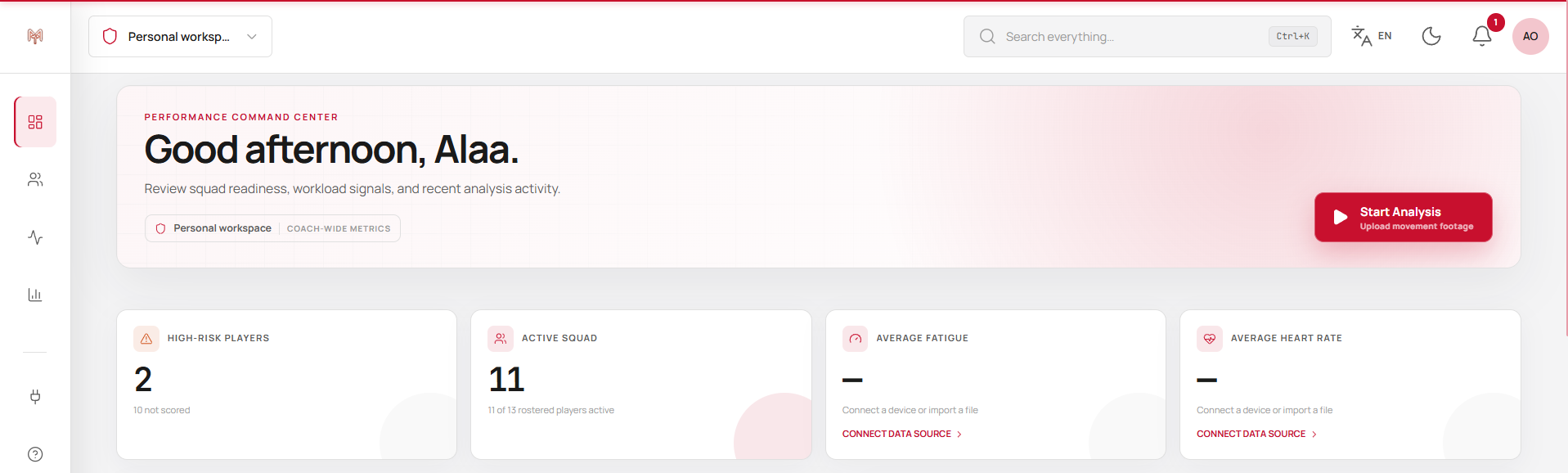
One session. One truth for the whole staff. Coaches see the form, performance sees the load, medical sees the risk — from any camera, fused with any wearable, honest by design.
Every significant soft-tissue injury leaves a biomechanical fingerprint before it happens — in how the athlete lands, how the knee tracks, how fatigue reshapes the gait. The human eye cannot read it at speed, at scale, in every session.
MITUS can.
Movement leaves evidence in more than one place. MITUS reads all of it — and fuses it into a single answer.
No lab. No suit. No markers. No calibration. If the clip is on a phone, MITUS can analyse it.
Drag any training or match clip into the platform — a cutting drill, a jump test, a rehab session. Standard MP4, straight from a phone.
Draw a box around the athlete on the first frame. The engine locks on for the rest of the clip — through occlusion, blur and camera pan. One athlete, or two side by side.
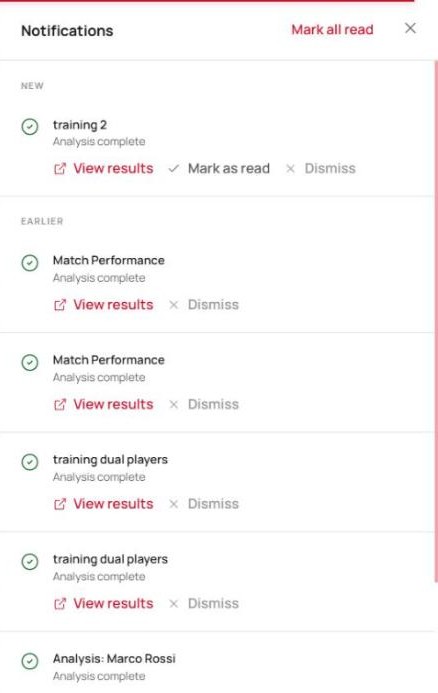
Six stages of analysis run in the background. About two minutes later the full session is on your dashboard — and your phone gets the notification.
Three precision tiers, selectable per analysis — from rapid squad screening to maximum-fidelity clinical detail.
Single or dual athlete tracking. Analyse one player — or two in the same clip, tracked independently and compared directly. Built for training-ground reality: mirrored drills, 1v1 duels, a rehab athlete against a baseline teammate.
Four capabilities just shipped — added directly from what coaches asked for so the platform fits the training ground, not the other way round.
Just shipped — photograph a team sheet, drop in a PDF or spreadsheet, and the platform extracts the squad with confidence-scored fields before asking the coach to confirm. A full roster onboarded in minutes, not an afternoon of typing.
Just shipped — upload one long training video. The engine detects each player, suggests identities by jersey number recognition, and the coach confirms with one tap. Every approved segment becomes its own per-player analysis — one upload, a whole squad of reports.
Just shipped — record directly inside MITUS with no switching apps and no transferring files. Film the drill, tag the athlete, and the analysis starts before the session ends.
Just shipped — a conversational agent, text and voice, that answers questions about your squad's data — "how did his landing mechanics change this month?" — with every answer cited back to the session it came from.
Every analysis returns eight deliverables — four biomechanical, four contextual. First, what the movement looks like.

The original clip with the movement overlay baked in — keypoints on every joint, speed vector tracking the athlete. Exported as a shareable MP4.

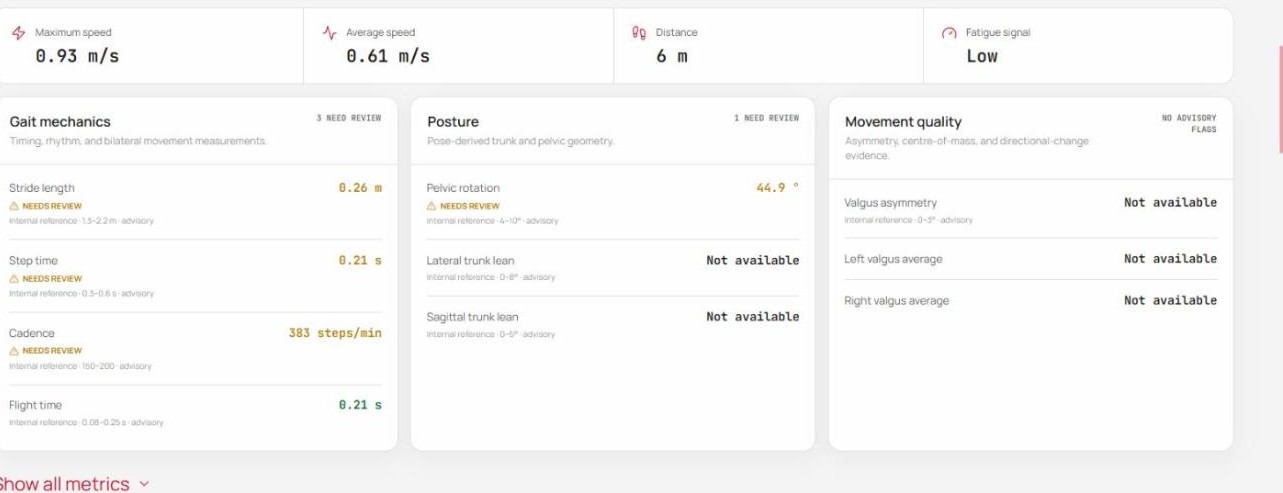
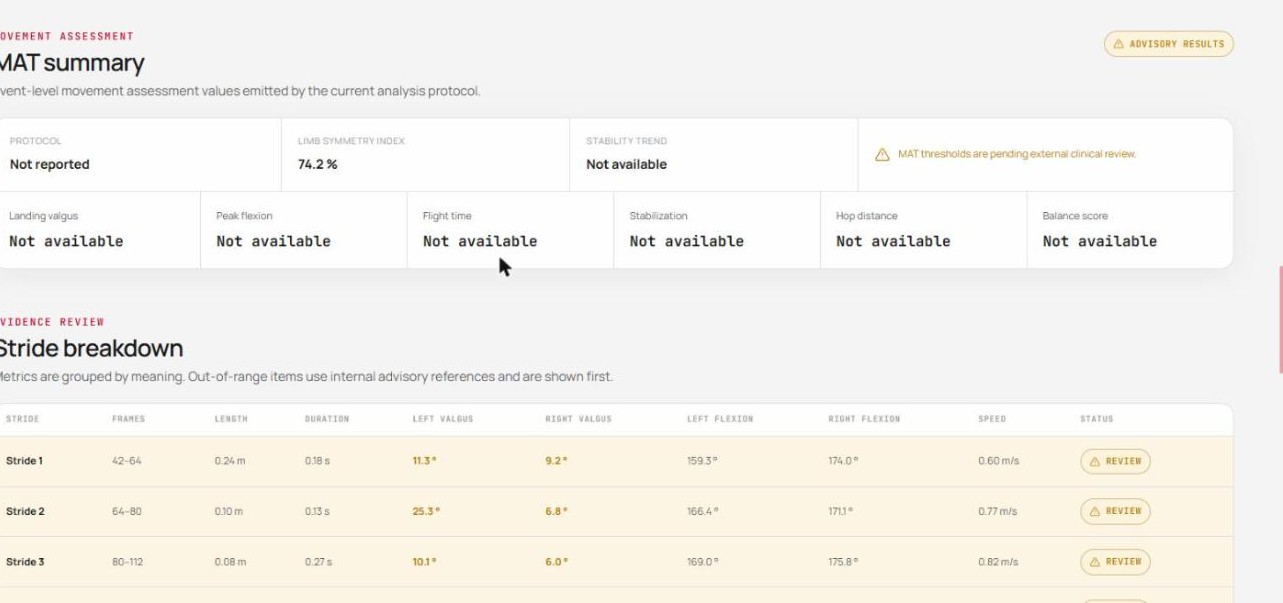
Stride length, step time, cadence, double support, pelvic rotation, trunk lean, valgus asymmetry and more — grouped by meaning, out-of-range items surfaced first against advisory reference ranges.

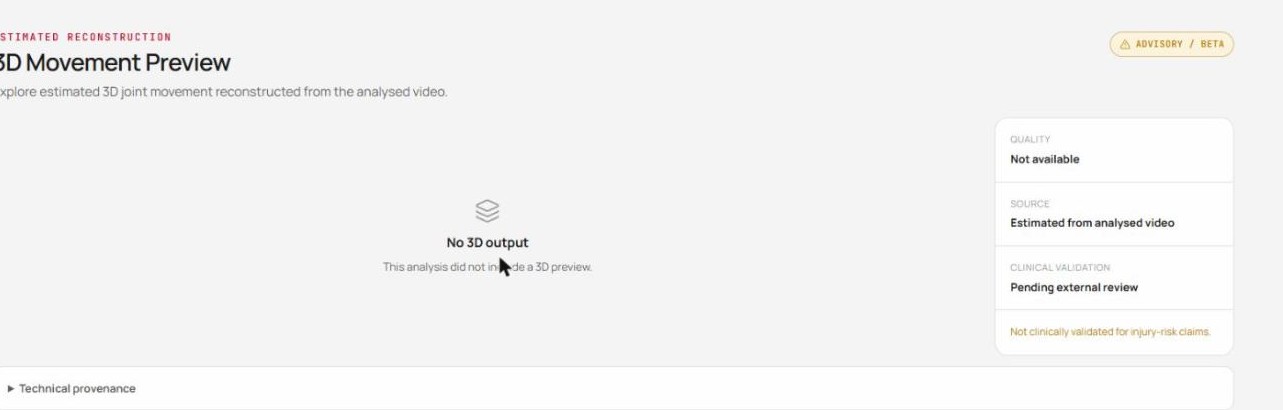
An interactive skeletal reconstruction, viewable in the browser. Rotate, pause, inspect any moment from any angle — a visualisation aid for the conversations that matter.

Movement Assessment Tool scoring for jump, landing and cutting protocols — weighted components exposed (Valgus 45 · Impact 25 · Spine 20 · Gait 10), limb symmetry index, flight time, stabilization. Implausible values are suppressed, never shown.
The remaining four deliverables put context around the movement — physiology, performance, a decision-ready summary, and everything shareable in one file.

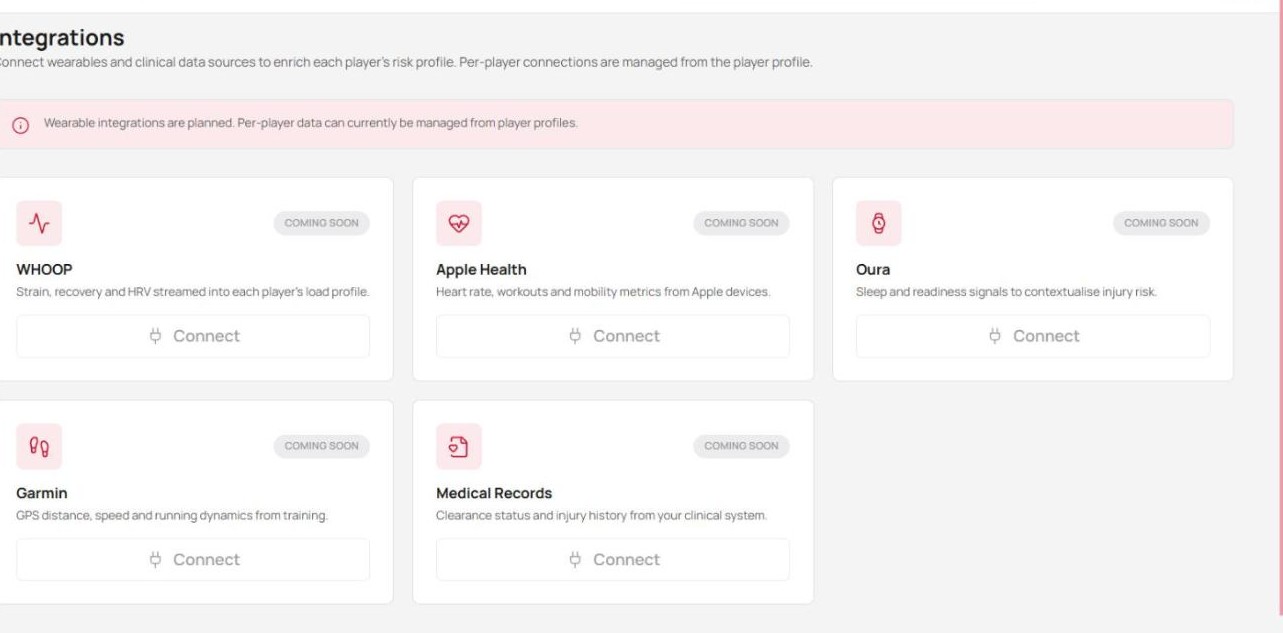
Heart rate, HRV, strain, recovery, sleep and readiness from the athlete's connected devices — WHOOP, Apple Health, Oura, Garmin — sitting beside the biomechanics, per athlete, per session.

Session-level performance context: maximum and average speed, distance covered, and a fatigue signal derived from how movement quality changes across the session.

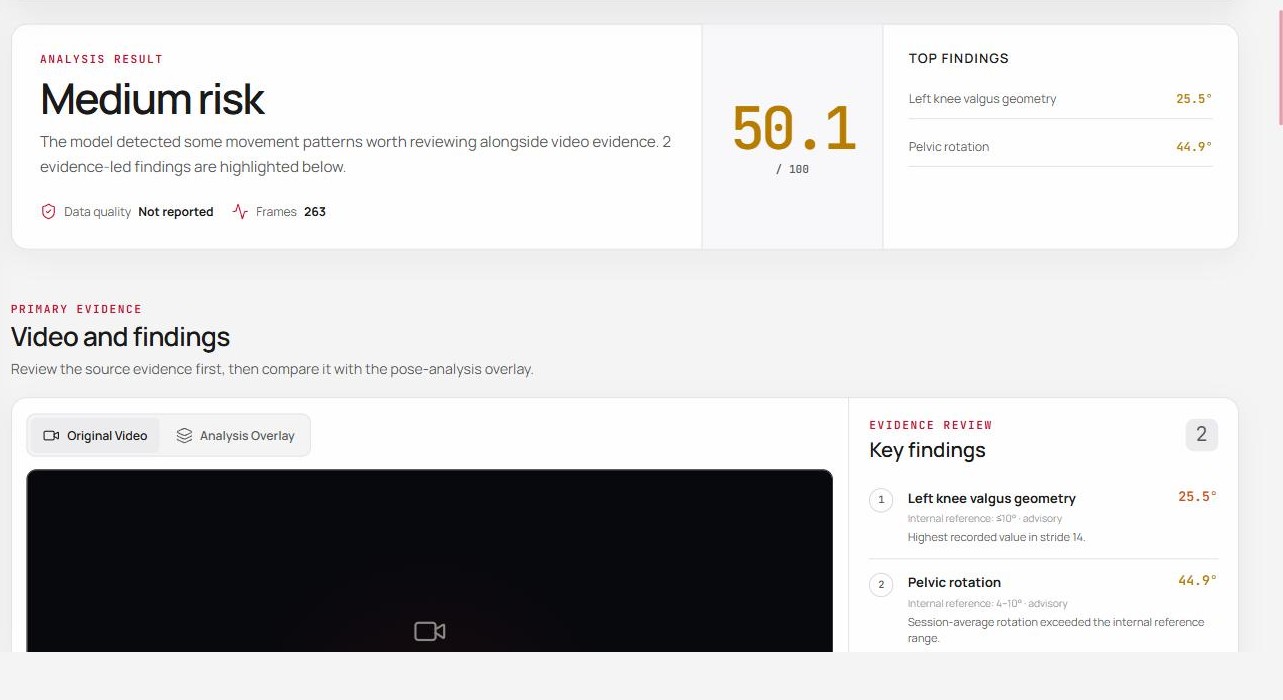
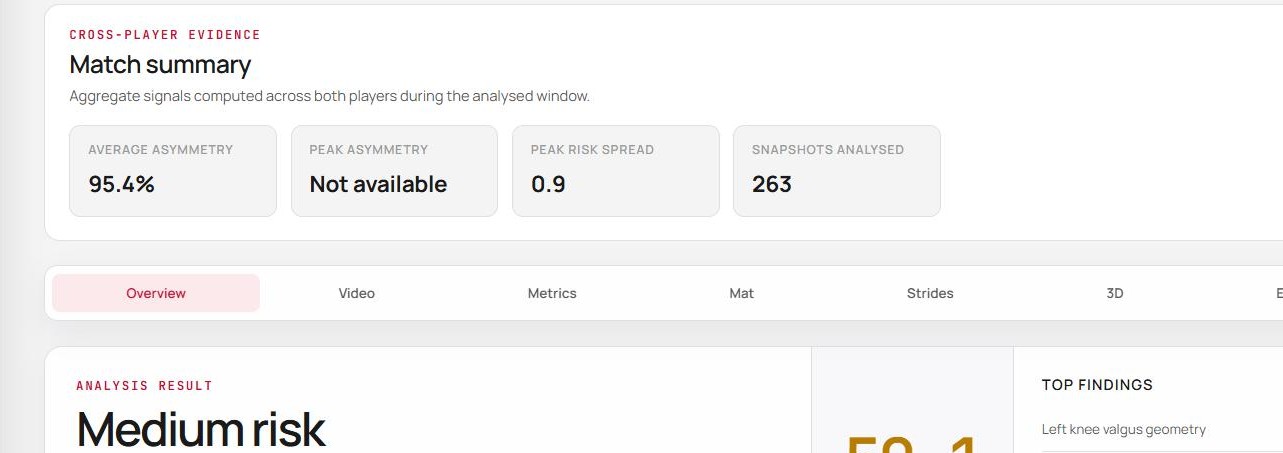
A decision-focused summary: movement-risk band, score out of 100, top findings — always with confidence and data completeness beside it. Advisory by design; a separate Clinical Detail view carries the full technical readout for medical.

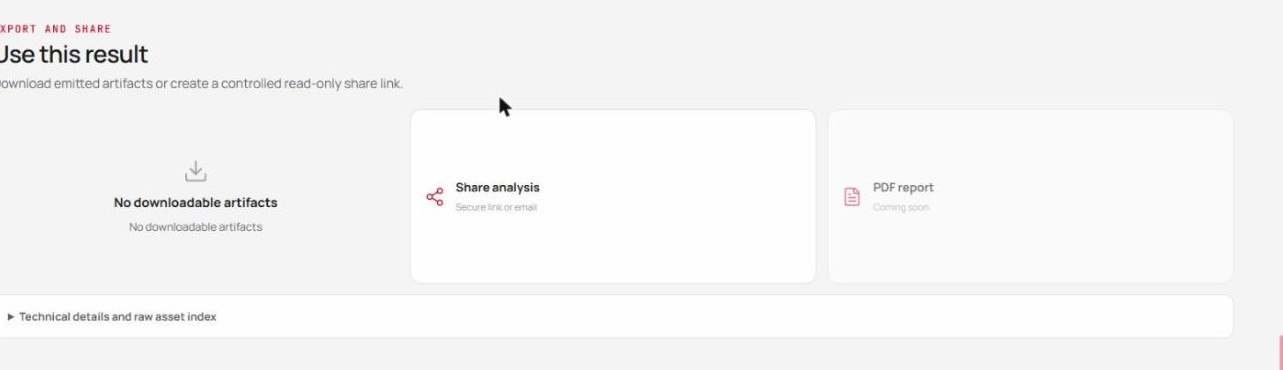
Full report, biometrics CSV, unified analytics JSON, event thumbnails — plus a tokenised, expiring, read-only share link with QR code for physios, consultants, or the player's file.
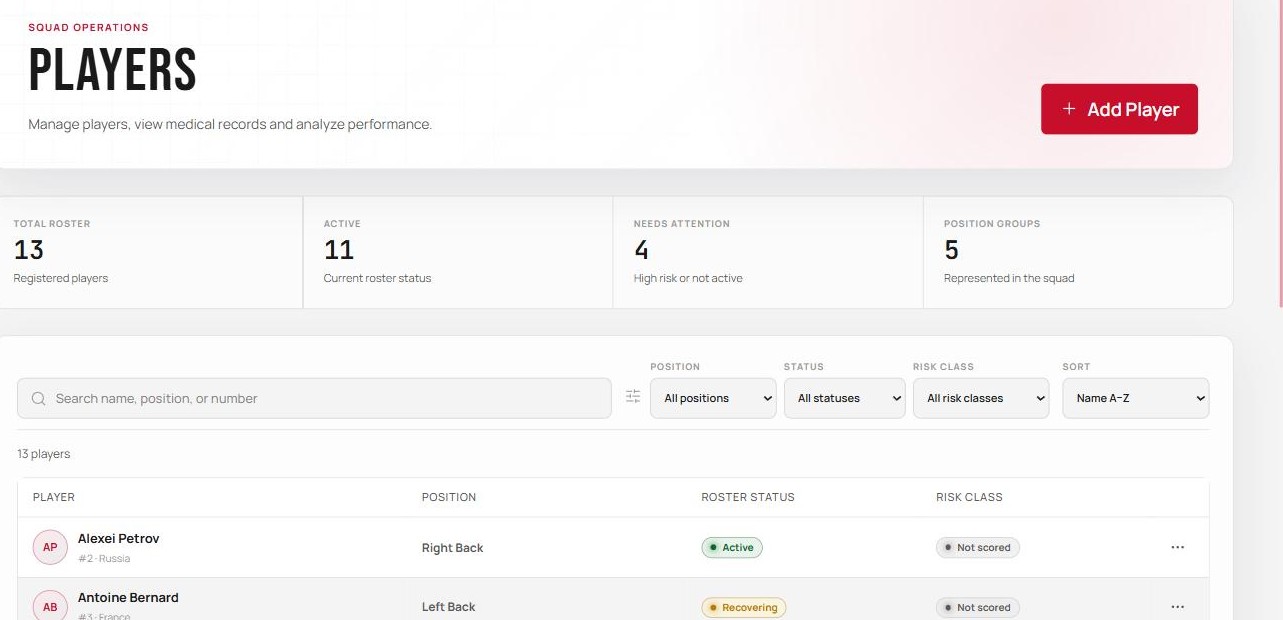
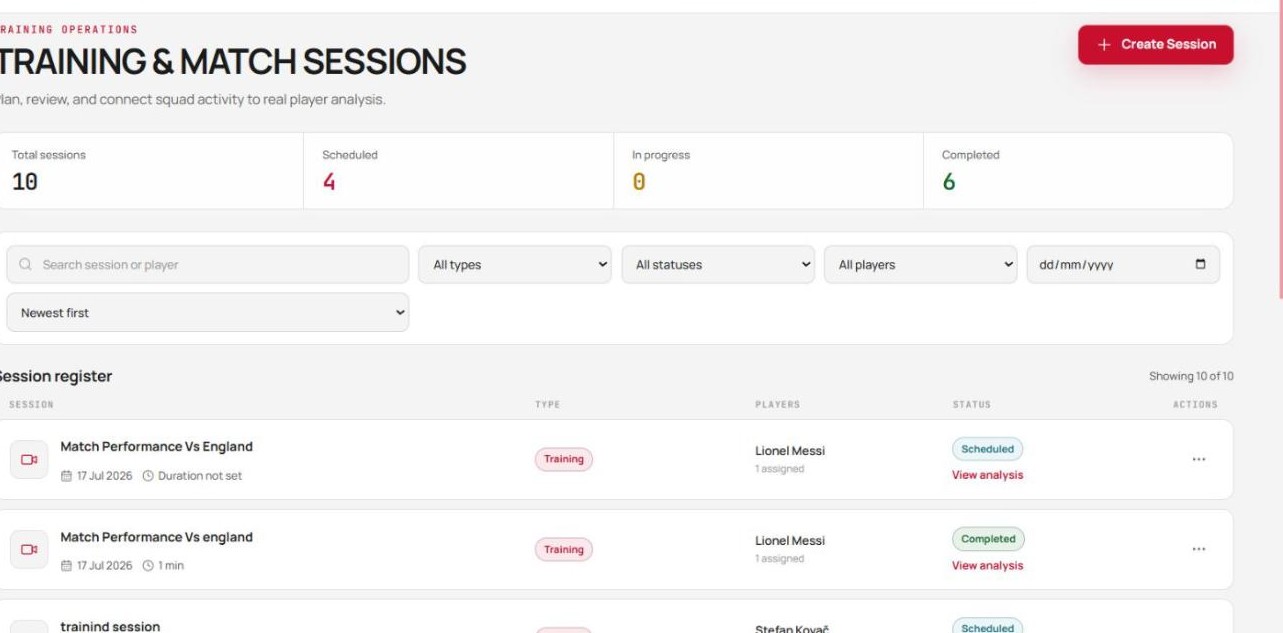
The analysis sits inside a platform designed for daily use by performance and medical staff — roster, sessions, live notifications and the connected-device layer, in one place. Every session an athlete produces gets added to their movement profile automatically.
Roster, sessions, live progress, and the wearable layer — each a first-class part of the workflow.

The full squad, risk-banded and filterable. Every player carries their movement profile, session history and risk trajectory — patterns across weeks, visible at a glance.

Every analysis, organised by session. Compare an athlete against their own baseline — today vs last week vs pre-injury — and watch the trajectory move.

Jobs run in the background; the platform tells you when a report is ready. Live progress on every analysis in the queue — no waiting on a screen.

The wearable layer connects per athlete — WHOOP, Apple Health, Garmin, Oura — alongside medical-record context, feeding the physiological side of every session.
Sports technology has a credibility problem: confident numbers on shaky inputs. MITUS was built the opposite way.
We're onboarding a small group of elite teams this summer. A demonstration on your own training footage takes one clip and one conversation.
One training clip, filmed on a phone. A cutting drill, a jump test, a rehab session — your choice, your athlete, your context.
We run it through the full engine and hand you the complete report — annotated video, metrics, 3D preview, protocol scoring, risk view.
Your performance and medical staff evaluate the output against what they saw with their own eyes. If it earns a place in your workflow, we scale it to the squad.